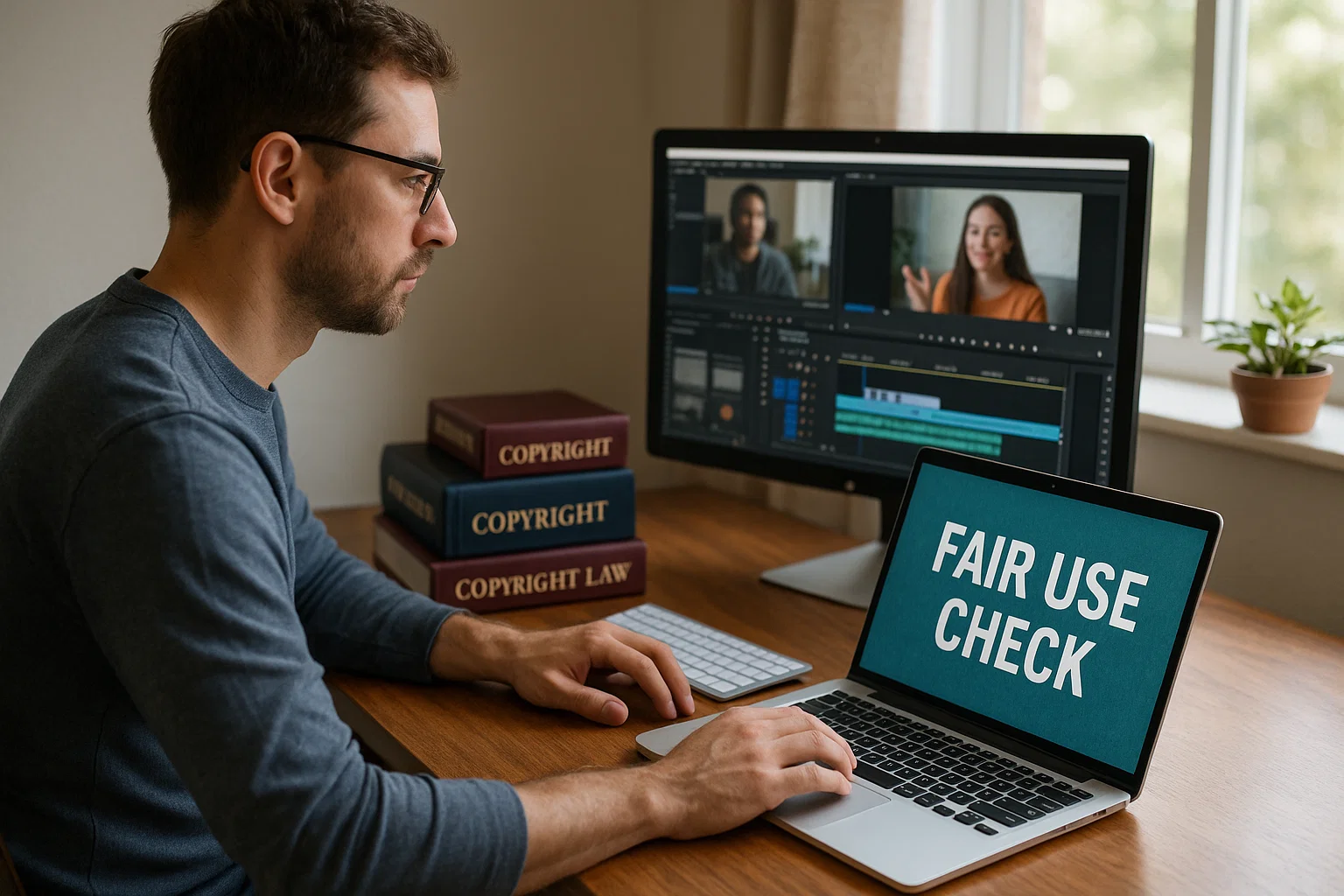
Still, it’s not a “get out of jail free” card. Fair use doesn’t mean “anything goes.” It means certain uses of copyrighted work are legally allowed, depending on context. And that’s what we’re going to unpack here how to use content fairly, respect other creators, and protect your own work.
What “Fair Use” Really Means
At its core, fair use is a U.S. legal doctrine that allows limited use of copyrighted materials without permission, for purposes that benefit public discussion and creativity things like education, commentary, research, parody, or journalism.
It’s not black-and-white. Courts weigh each case on four criteria. Think of them as guiding questions, not rigid checkboxes.
The Four Criteria for Fair Use
Here’s what every creator should know before hitting publish.
1. Purpose and Character of the Use
Ask: Why are you using this material?
Fair use favors work that adds something new transformative use. Are you educating, criticizing, or creating a parody? That’s safer ground. But if you’re just reposting someone’s song in your video background, that’s likely not fair use.
Examples:
- A YouTuber reviewing a movie and using short clips for context likely fair use.
- A TikToker uploading full episodes of a show with no commentary not fair use.
2. Nature of the Copyrighted Work
Ask: Is the original work more factual or creative?
Using factual works (like a news report or historical data) leans toward fair use because facts belong to everyone. But using creative works (songs, novels, films) is riskier. The more expressive or artistic something is, the stronger its copyright protection.
3. Amount and Substantiality of the Portion Used
Ask: How much did you use and was it the “heart” of the work?
Fair use isn’t just about quantity; it’s about significance. You could use a few seconds and still violate fair use if it’s the most memorable part of the work.
Tip: Use only what you absolutely need to make your point. Trimming and contextualizing go a long way.
4. Effect on the Market Value
Ask: Does your use hurt the original creator’s ability to profit?
If your version competes directly with the original or reduces its commercial value, it’s likely infringement. Fair use exists to inspire new creations, not to replace the originals.
What’s Not Allowed Under Fair Use
Now that we’ve seen what might qualify, let’s be clear about what doesn’t.
- Uploading copyrighted movies, songs, or books in full even with “no copyright intended.”
- Using someone’s artwork or music in your product or ad campaign without permission.
- Copy-pasting articles or blog posts and changing a few words.
- Using copyrighted visuals in paid courses or eBooks without rights.
Bottom line: Fair use doesn’t protect profit-driven copying. It protects transformative creativity works that add meaning, insight, or commentary.
The Five Common Exemptions You Should Know
Fair use overlaps with several copyright exemptions think of them as gray zones where content can be used responsibly:
- Criticism and Commentary: Movie reviews, reaction videos, and essays that analyze or interpret original work.
- Parody: Transforming original content to create humor, satire, or critique.
- Education: Teachers showing clips or excerpts for instruction under controlled conditions.
- News Reporting: Journalists quoting or showing material for factual coverage.
- Research and Scholarship: Academics referencing material for study or comparison.
Each case still depends on context. Even if you fall under an exemption, it’s smart to credit the source and keep your usage minimal.
How to Legally Determine Fair Use
There’s no magic formula. Fair use is a judgment call. But you can think of it as a checklist of balance how much you take vs. how much you give.
Here’s a quick way to evaluate your content before posting:
| Question | If You Answer “Yes” | Risk Level |
|---|---|---|
| Am I transforming the original work with new meaning or commentary? | You’re likely within fair use. | Low |
| Am I using more than necessary? | Trim it down. | Medium |
| Could this harm the original creator’s market value? | You’re likely infringing. | High |
| Am I giving credit, even if not required? | Good practice. | Low |
| Am I using it for commercial profit without adding value? | Red flag. | Very High |
Tip: When in doubt, document your reasoning. Courts often look for good faith. Showing that you considered fair use thoughtfully can help if your content is ever challenged.
Fair Use in the Age of AI and Remix Culture
AI tools have made remixing content easier and messier. Writers, musicians, and digital artists are training models on vast datasets of copyrighted material. The question now is: if an AI “learns” from copyrighted text or art, is that fair use?
Courts haven’t fully decided. Some argue AI training is transformative; others say it reproduces original patterns too closely.
For creators using AI:
- Use AI tools that disclose their data sources.
- Avoid generating close replicas of specific artists’ styles.
- Don’t publish AI outputs as-is add your own input, edits, and insights.
Fair use in the AI era will depend on how transparent and transformative your process is.
Real-Life Examples That Shaped Fair Use
- Campbell v. Acuff-Rose Music (1994): 2 Live Crew’s parody of “Oh, Pretty Woman” was ruled fair use because it added new meaning and commentary.
- Sony Corp. v. Universal (1984): Home recording of TV programs for personal viewing was fair use non-commercial and time-shifting in nature.
- Google Books (2015): Scanning millions of books for search indexing was deemed transformative it helped discovery without replacing the originals.
These cases prove one thing: transformation and public benefit often tip the scales toward fair use.
Protecting Your Own Work
Understanding fair use isn’t just about avoiding lawsuits it’s about knowing how to defend your own creativity too.
Here’s what you can do:
- Register your work with the U.S. Copyright Office for stronger protection.
- Add clear usage terms on your site (“you may quote up to 100 words with credit”).
- Use Creative Commons licenses to share your work openly while keeping control.
- Track content use online with tools like Copyscape or Google Alerts.
When others respect your rights, creativity thrives on both sides.
Quick Myths About Fair Use
Myth 1: “If I credit the creator, it’s fair use.”
Not necessarily. Attribution helps, but it doesn’t override legal limits.
Myth 2: “I can use 30 seconds or less of anything.”
There’s no safe time or word limit. Courts look at context, not duration.
Myth 3: “If it’s on the internet, it’s free.”
Definitely not. Most online content is copyrighted by default.
Myth 4: “Educational = automatically fair use.”
Even educators must limit usage to what’s necessary for learning.
Fair Use and Global Perspectives
While “fair use” is a U.S. concept, other countries have similar doctrines:
- UK: “Fair dealing” for criticism, review, or reporting.
- Canada: Broader fair dealing for education and research.
- Australia: Specific exceptions but stricter than U.S. law.
If your audience is global, be cautious. What’s fair use in one country may still infringe copyright elsewhere.
Final Thoughts: Fair Use Is a Mindset
Fair use isn’t about finding loopholes it’s about balance. You can stay creative, innovative, and respectful at the same time. The goal is not just to avoid breaking the law but to build an ecosystem where creative exchange feels safe and fair.
As creators, we don’t need to be lawyers but we do need to understand the spirit of the law. Fair use isn’t meant to limit creativity; it’s meant to protect it.

Covers AI writing tools, large language models, prompt engineering, AI detection, and practical AI writing workflows for Spinbot.ORG.