
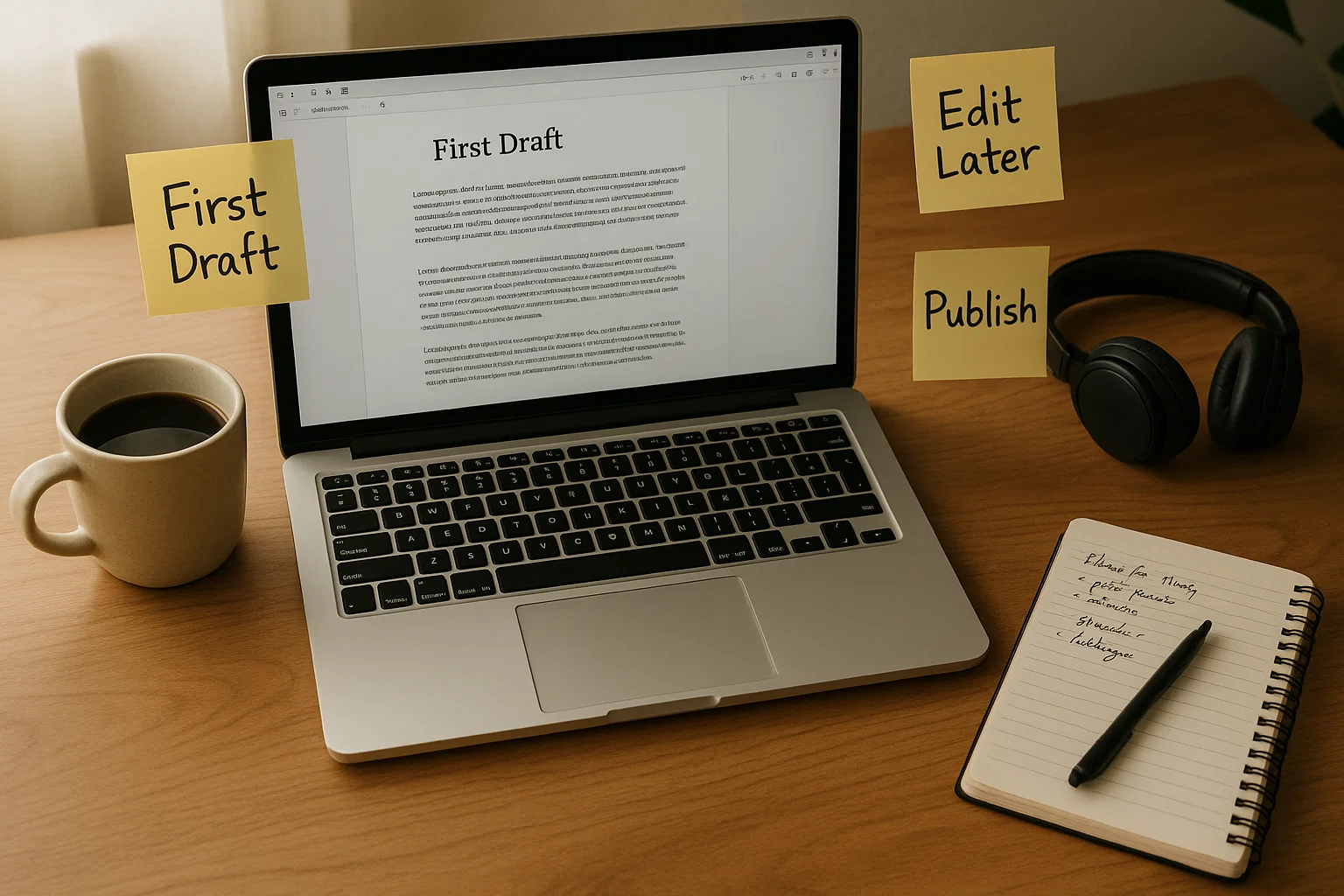
Ever wish writing felt less like pulling teeth and more like a creative flow? You’re not alone. Every writer from bestselling authors to students finishing essays at 2 a.m. runs into the same wall: getting words from your head onto the page without losing your mind.
The good news is that writing isn’t magic. It’s process. And small, consistent tweaks in how you write can make a massive difference in clarity, speed, and output. Here’s what works, why it works, and how you can make it part of your daily writing rhythm.
Why “Hacks” Work in Writing
A writing hack isn’t a shortcut that skips skill; it’s a smarter habit that frees up mental energy. Think of it like adjusting your typing posture or rearranging your desk tiny moves that make the whole system run smoother.
Writers like Maya Angelou and Haruki Murakami used routines that bordered on ritual. Modern creators mix that discipline with tech: distraction blockers, voice dictation, and AI tools. The goal’s the same get out of your own way so ideas flow freely.
1. Use the 40-20-40 Rule
This approach originally a time-management method splits your effort:
- 40 % planning: outlining, mind-mapping, or just brain-dumping raw ideas.
- 20 % drafting: writing fast without worrying about perfection.
- 40 % editing: sculpting the draft into something sharp and readable.
Most people skip straight to drafting and wonder why it feels messy. Planning clarifies intent; editing gives it polish. The middle is just the bridge.
2. The 4 C’s of Good Writing
Clarity, Concision, Coherence, and Creativity. They sound obvious, but keeping them visible literally on a sticky note near your screen keeps you honest.
Before publishing, do a 4 C check:
- Clarity: Does each sentence say exactly what I mean?
- Concision: Can I cut fluff without losing meaning?
- Coherence: Does one idea flow naturally into the next?
- Creativity: Does my voice sound alive, or robotic?
That last one matters most in an AI-saturated world.
3. Write in Sprints, Edit in Waves
Borrowed from software development, “sprints” mean focused bursts. Set a timer for 25 minutes, write without stopping, then rest for 5. That rhythm builds stamina and focus.
When you revisit the draft, edit in “waves”: one pass for structure, another for voice, another for grammar. Each round has a purpose, so you’re not endlessly tinkering.
4. The 1-Hour, 1 000-Word Challenge
Yes, you can write a thousand-word essay in an hour but only if you stop editing mid-sentence. Set a clear topic, outline three main points, and write like you’re explaining it to a friend who’s slightly impatient.
You’ll surprise yourself. Momentum matters more than perfection. You can’t polish what isn’t written.
5. Hack Your Environment
Your brain links spaces with activities. That’s why it’s easier to scroll social media on the couch than study there.
Create a writing zone even if it’s just a small desk or a café corner and use cues: same playlist, same drink, same time of day. It tells your brain, “We’re writing now.”
Digital environment counts too:
- Use focus mode or an app like Freedom to block distractions.
- Keep your desktop clear.
- Turn off notifications every ping is a thought derailment.
6. Talk, Then Type
When your mind’s faster than your fingers, use voice dictation. Tools like Otter.ai, Notta, or even Google Docs voice typing capture ideas before they fade.
Dictate your messy thoughts, then refine later. Many great authors Hemingway included spoke their drafts aloud. Speech frees rhythm; editing brings precision.
7. Draft Ugly, Edit Beautiful
Separate creation from criticism. Your first draft’s job is existence, not excellence. That’s why professional writers use “vomit drafts” fast, emotional, unfiltered.
Only later do they bring in structure, logic, and polish. Mixing the two modes kills both flow and creativity.
8. Steal Energy From Other Writers
Before you write, read a few paragraphs from someone whose style you admire. It primes your linguistic brain. Neuroscience calls it language mirroring. You’re not copying tone you’re warming up your rhythm.
Writers as different as Stephen King and Zadie Smith have sworn by this pre-writing ritual. Think of it like stretching before a run.
9. Automate the Boring Stuff
Grammar checks, headline scoring, readability analysis let software handle it. Tools like Grammarly, Hemingway, or Authors.ai catch patterns you miss.
Automation isn’t cheating; it’s creative preservation. The less time you waste fixing commas, the more you can spend on meaning.
10. Treat Editing as a Puzzle, Not Punishment
Most writers dread editing because they see it as judgment day. Flip that mindset. Editing’s where you solve problems. Every unclear line is a clue to better structure.
Zoom out first (does the piece flow?), then zoom in (word choice, rhythm, transitions). Celebrate small fixes they add up to clarity.
11. Hack Writing for ADHD Minds
If focus feels slippery, use kinetic cues: write standing, bounce a leg, or hold a stress ball. Movement grounds attention.
Break work into micro-goals: one paragraph, one section, one page. Then reward completion with a stretch, a song, or coffee. Consistent reward loops train your brain to crave the process, not dread it.
12. Build a “Second Brain” for Ideas
Keep all your sparks quotes, lines, notes in one searchable place. Notion, Obsidian, or even Google Keep can act as your external hard drive for inspiration.
That way, when the muse goes silent, you still have a backlog of thoughts waiting to grow.
13. The AI Co-Writer Trick
Use AI tools as creative companions, not replacements. Ask them for outlines, rephrasing options, or counterarguments. The point isn’t to outsource thinking it’s to push it further.
Experiment with prompt chaining: give the AI a rough draft, then ask it to challenge or expand specific ideas. You’ll keep control while accelerating insight.
14. Rehearse Writing Like a Sport
Athletes train drills; writers can too. Warm-up by rewriting a random paragraph from memory, or summarizing a page you just read. It sharpens recall and phrasing speed.
You’re training your linguistic reflexes, not chasing a perfect outcome.
15. End With a Power Edit
Before publishing, do one ruthless pass using three filters:
- Purpose: Why should the reader care?
- Pace: Does each paragraph move the story or argument forward?
- Punch: Is there a memorable line worth quoting?
Anything that fails those tests cut it.
What the Pros Get Right
Looking at hundreds of author routines (from WritingRoutines.com and Authors.ai), one truth repeats: discipline beats inspiration. Great writers don’t wait to feel ready. They build systems that make writing inevitable.
Murakami writes at dawn. Angelou used rented hotel rooms to focus. Stephen King writes 2 000 words daily no exceptions. Their hacks differ, but the principle’s identical: environment and habit shape output more than talent ever will.
Find Your Own Rhythm
No single hack fits everyone. The real trick is self-observation. Notice when you write best morning or night, music or silence, longhand or keyboard. Then design your workflow around that data.
Writing isn’t about forcing discipline; it’s about designing conditions where focus naturally appears.
Final Takeaway
Writing process hacks aren’t gimmicks. They’re practical systems that make creative work sustainable. Try one or two, adapt them, and build your own toolkit over time.
When writing feels effortless, it’s rarely luck it’s structure doing its quiet magic.

AI writing strategist with hands-on NLP experience, Liam simplifies complex topics into bite-sized brilliance. Trusted by thousands for actionable, future-forward content you can rely on.